Bright and cosy: how to look after a fabric lampshade?
All the objects in our homes, however small or large they may be, are not merely appliances or tools. They help us carry out certain household tasks and save time when we’re in a real hurry. But more importantly, they often envelop us in cosiness, comfort us with their warmth, bring us peace and allow us to relax.
When we have breakfast at the family table, when we settle down cosily on the sofa with a cup of tea, when we read the last few pages of the day’s newspaper in bed before falling asleep, these objects ensure our comfort and relaxation.
As they bear witness to our daily lives, they become the heart of our homes. A heart that needs gentle care and attention.
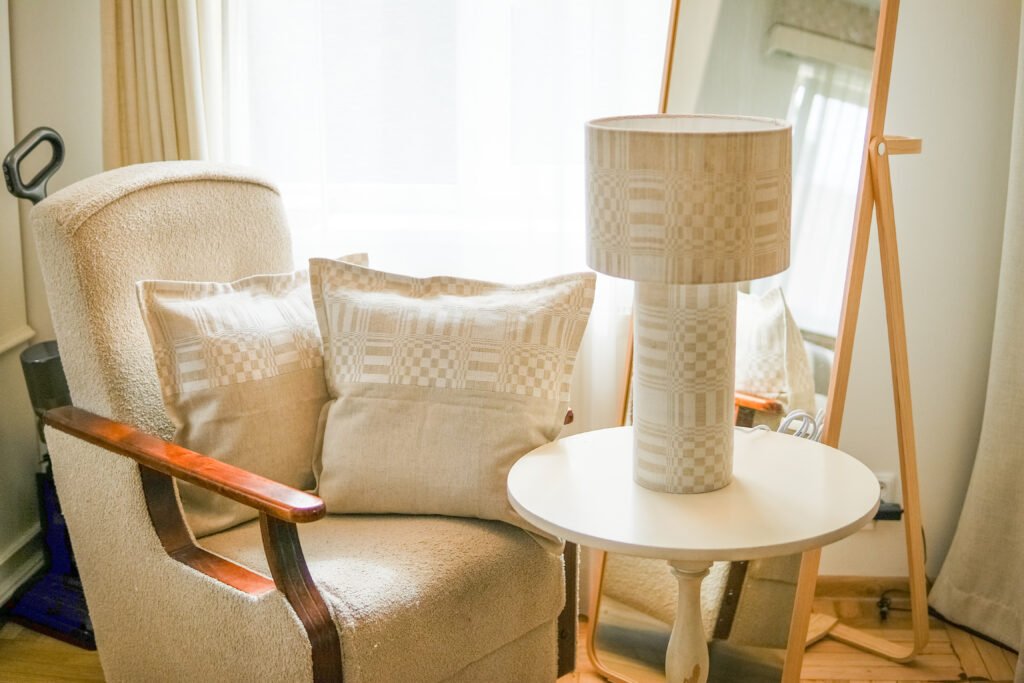
Our mums, grandmums and great-grandmums knew how to make things last, mend them and preserve them. That is precisely why I am now able to create light fittings from authentic Lithuanian fabrics.
We hope that these fabric lampshades will bring joy to and adorn your home for as long as possible, and that the fabrics will remain beautiful and, perhaps, be passed down to future generations. To help you preserve this beauty and pass it on to your children and grandchildren, it’s worth knowing a few simple care tips.
How do you look after a fabric lampshade?
Caring for a fabric lamp is easy and straightforward: dust it gently and regularly, avoid harsh cleaning products, and choose a suitable spot in your home.
Workshop participants, whilst making a lampshade for their homes, often worry that looking after it might be particularly difficult. I understand why: after all, when holding a decades-old piece of fabric, adorned with Lithuanian patterns, people can feel its softness and fragility. Of course, a fabric lampshade seems far more delicate than one made of metal or glass, but I want to assure you that a little care and a gentle touch will keep your lampshade looking beautiful for years to come.
The most important thing is consistency
Dust is an ever-present part of everyday life. It is only natural that it settles and accumulates on a lampshade, particularly on the top part of the shade. Therefore, the most important thing we can do is to remove dust regularly, preventing it from forming a layer on the fabric.
Important: Always switch off the light fitting and allow it to cool down completely before cleaning the fabric shade.
How do you remove dust?
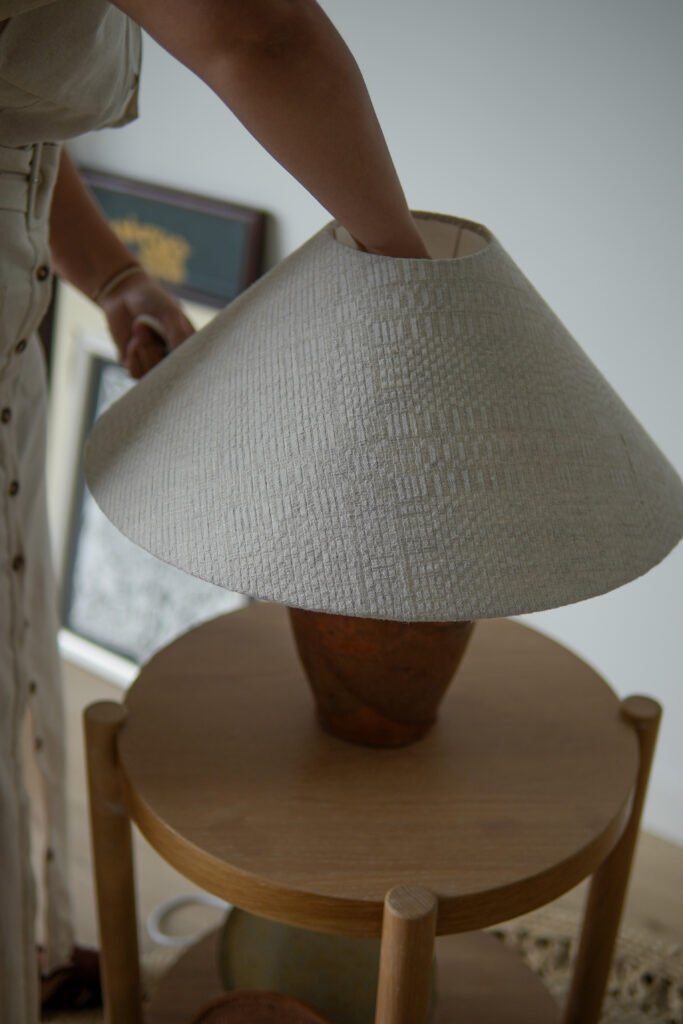
There are several simple ways to remove dust from the hood. You can use a dry, soft duster, a lint roller designed to remove dust from clothes, or a small handheld vacuum cleaner. Just be careful! When using a vacuum cleaner, make sure you set it to the lowest suction power.
Be gentle: do not press down on or rub the fabric with the vacuum cleaner nozzle, a cloth or a lint roller. The light fitting will thank you for your care and caution.
How do you remove stains?
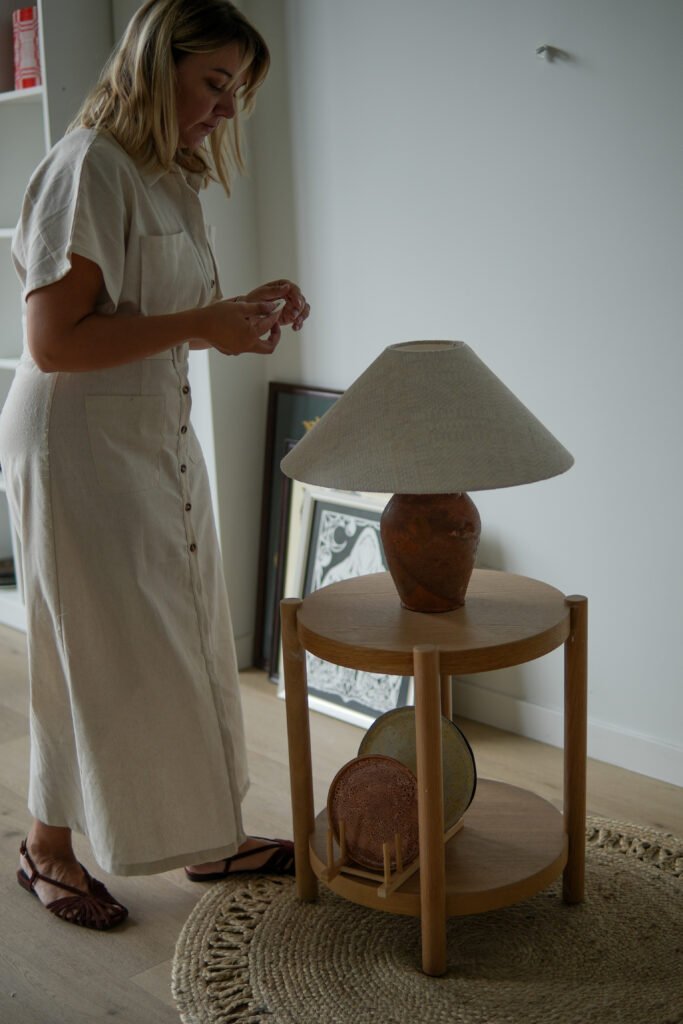
If you spot a stain on a fabric lampshade, don’t rush to use water or harsh cleaning products. The fabrics we use to make our light fittings vary in composition, density and thickness, weave, dyeing method and age. We should be particularly careful with old, delicate, hand-woven fabrics that have been stored away in a cupboard or chest for a long time.
If you really want to freshen up the fabric but aren’t sure whether wet cleaning is suitable for it, it’s best to use a soft cloth that’s only slightly damp and wipe down the fabric lampshade with it. A large amount of water can damage the fabric, especially if it is dyed: patches where the fabric has dried out may remain visible and stand out. It’s better to opt for a safer solution and leave strong stain removers for other household items.
Let’s protect and preserve it – and not just from dust
Lithuanian textiles are part of our national heritage, which we wish to preserve and protect. The fabric from which the lampshade is made can be affected not only by a thick layer of dust, if left uncleaned, but also by unsuitable environmental conditions. The fabric shade is sensitive to airborne particles.
To preserve an authentic Lithuanian textile unaffected by its surroundings, carefully consider where you place the lamp in your home. Direct sunlight streaming in during the day can alter the fabric’s colour, while kitchen odours can be absorbed into it. Your care and attention to this national heritage begins with choosing the right location.
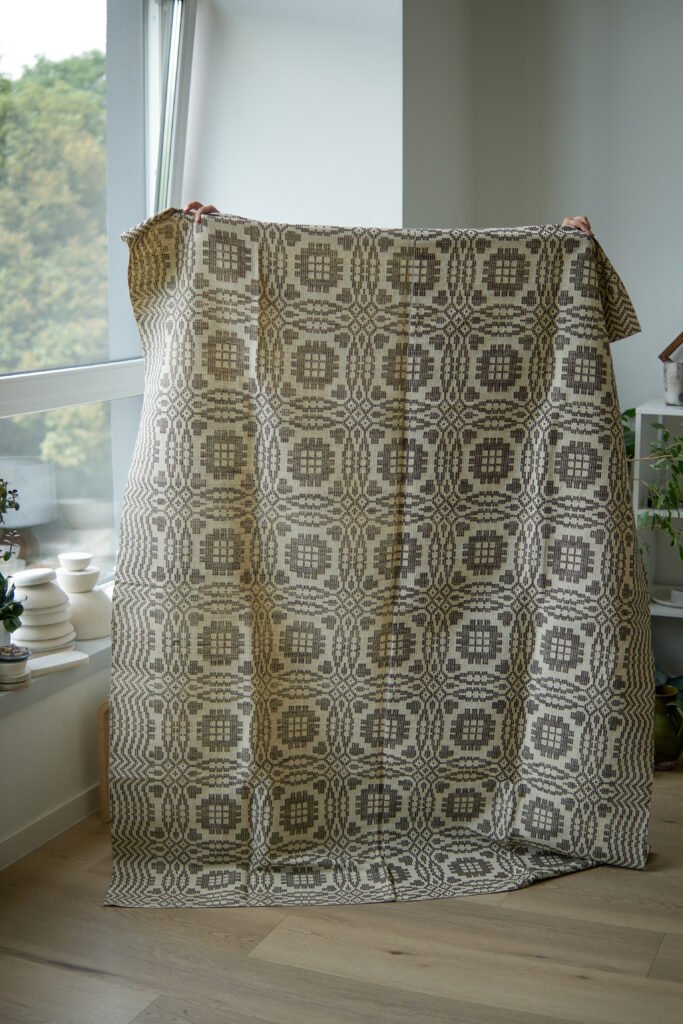
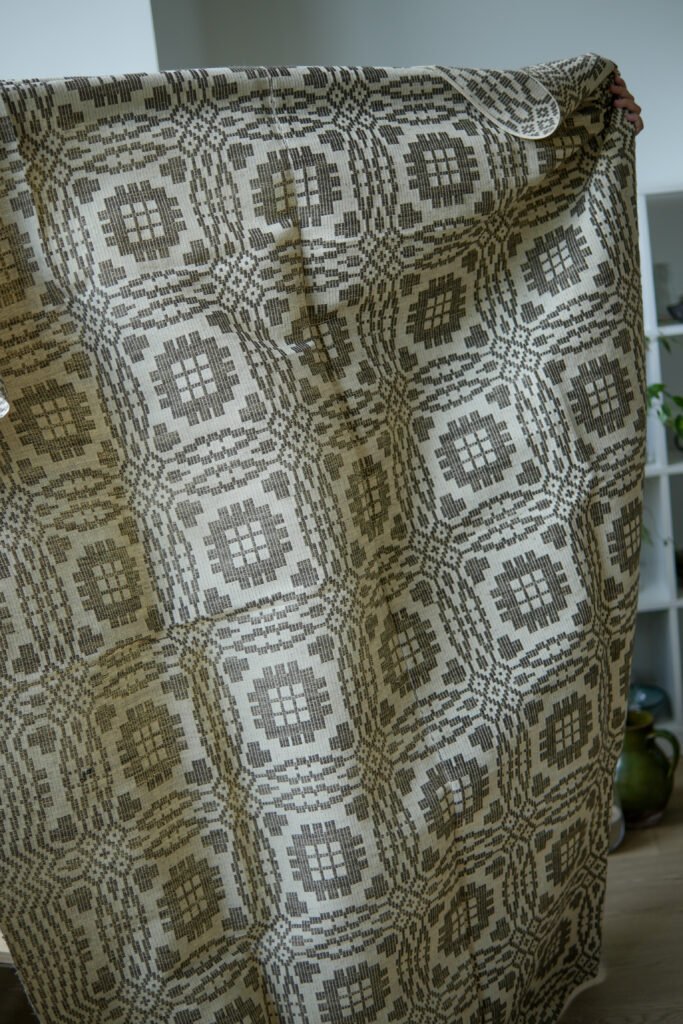
How to preserve an old Lithuanian textile found in your grandmother’s chest?
If you’ve been fortunate enough to inherit your grandmother’s trousseau, don’t rush to wash, clean, or otherwise restore your find. It’s likely that a textile that has spent a long time at the bottom of a chest or tucked away in a cupboard will give off quite a strong smell, so the first step is to air the textile.
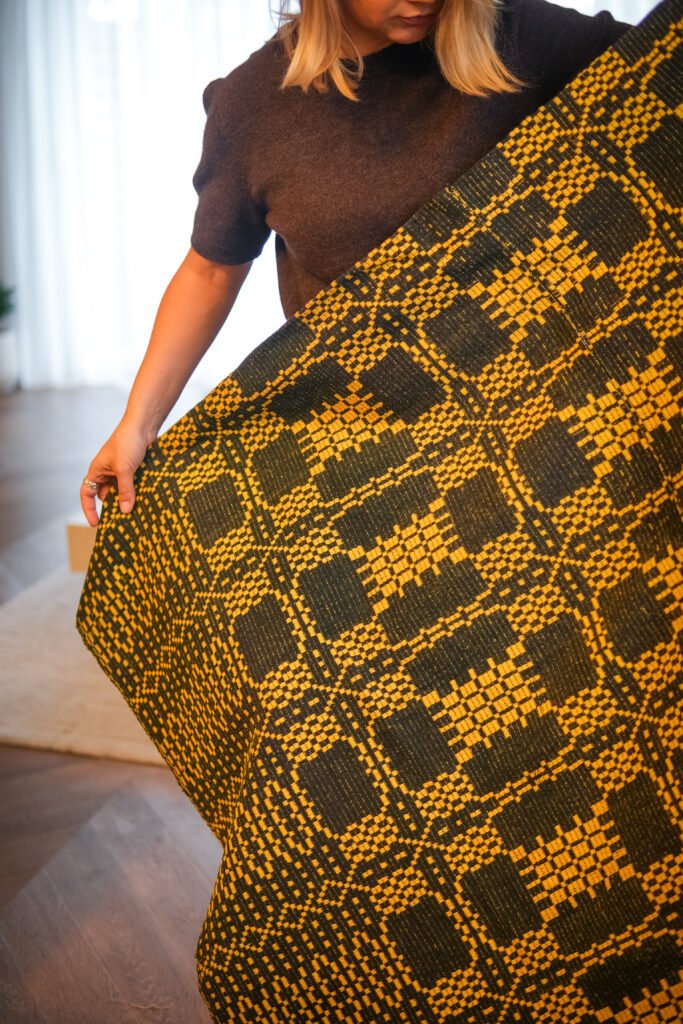
The second important step is to assess your find, its condition, and its potential value. I’ve already written about how to recognise a valuable Lithuanian bedspread in an earlier post on the site. It may be that you’re holding a valuable piece of Lithuanian heritage, safeguarding the secrets of old weaving traditions and craftsmanship, so please don’t take any hasty action.
Old Lithuanian textiles can vary greatly and require specific care. Examine the fabric closely for any thinning or crumbling areas, pay attention to its patterns, colours, stitching, and other signs of life. Only then should you think about refreshing the textile.
Can you wash an old authentic textile in a washing machine?
If the fabric appears sturdy enough and is suitable for washing, you can refresh it by washing by hand or in the washing machine at a low temperature. Just be sure to choose a gentle wash or hand-wash setting with a low spin speed.
Under no circumstances should you wash coloured, thin, delicate, or fragile fabric.
A cold winter – a textile’s revival
Lithuania has long known a method of cleaning textiles with snow. Although in today’s world such a cleaning method may seem unusual, our ancestors used it precisely this way to remove dirt and dust from various fabrics. If the winter is cold and there’s plenty of clean, powdery snow around – give your textile a snow bath.
First, take the textile outside and let it cool thoroughly. Then lay the fabric on clean, dry, powdery snow (wet, sticky, and heavy snow is absolutely unsuitable!) and gently cover the textile with it. Don’t rub hard or press down; gently pat and repeat, turning the fabric over. Shake off the snow and allow it to dry naturally at room temperature.
If needed, you can repeat this cleaning several times. Important: do not hang a textile cleaned this way on a radiator or near any other heat source. Let it dry slowly.
How to bring Lithuanian textiles back to life?
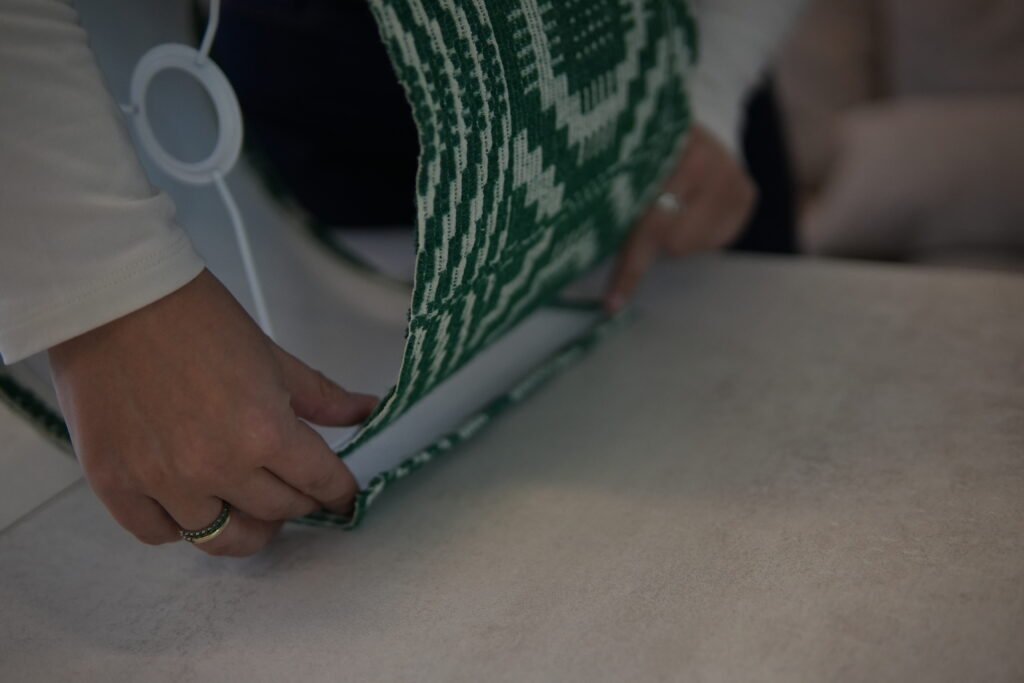
In your grandmother’s chest you may find not only bedspreads, but also tablecloths, napkins, towels, covers, bed throws, sashes, decorative fabrics, or their remnants. Don’t be quick to write off this trousseau as old relics. A Lithuanian pattern, authentic weaving, or meticulous handwork can become a unique detail in a contemporary interior and a true adornment for your home. Be creative: turn an old textile into a table runner, a wall décor accent, or another unique interior object. You can even make a textile lampshade by attending a workshop and creating a warm and cosy light source with your own hands. That’s my favourite way to preserve and bring textiles back to life!
Sustainability: let history live on in your home
Even if an old object can no longer be used for its original purpose, it’s important to see the possibility for this heritage to live on – creating warmth in your home or the homes of others. Objects with a history can not only be brought back to life, but also become a bridge connecting past and future generations. They can preserve the memory of our great-grandmothers’ hands, become a family heirloom, or turn into a small fragment of Lithuanian history in your home.
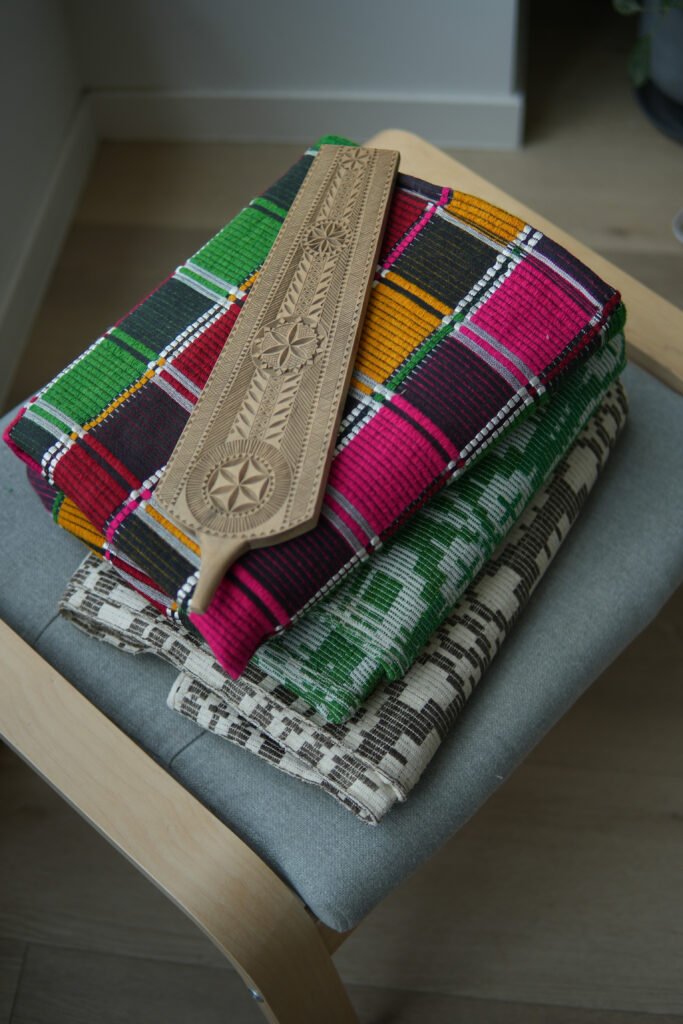
“Even if an old object can no longer be used for its original purpose, it’s important to see the possibility for this heritage to live on – creating warmth in your home or the homes of others.”
Photographs – Justina Smertjevė