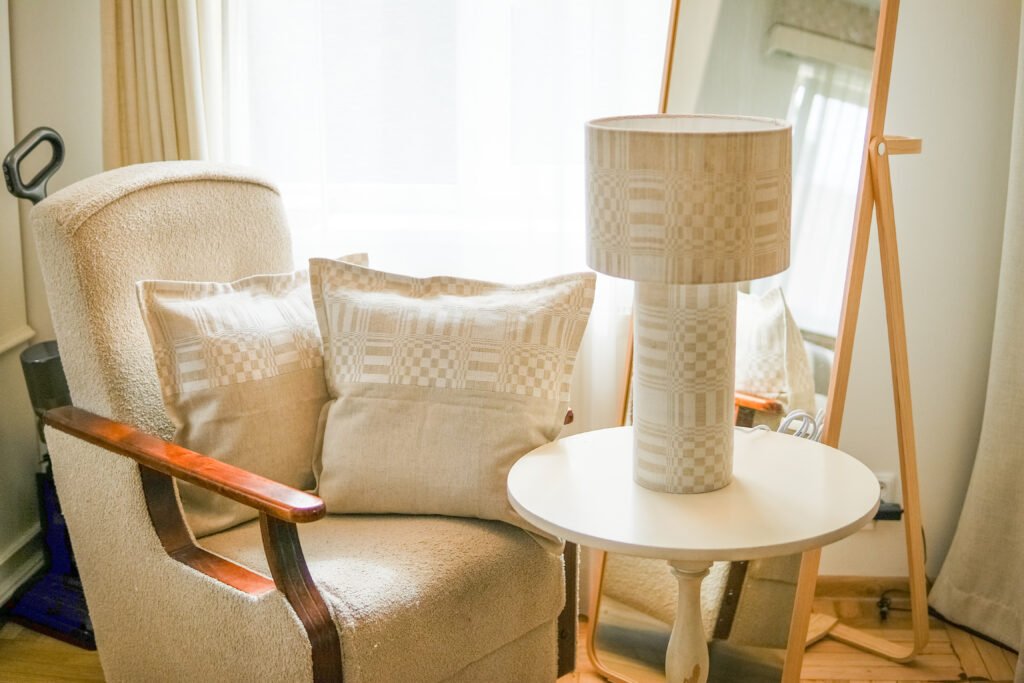
A hand-woven Lithuanian bedspread is more than just a textile piece. You can read in it the weaving tradition, materials, craftsmanship, and sometimes even the history of a particular family.
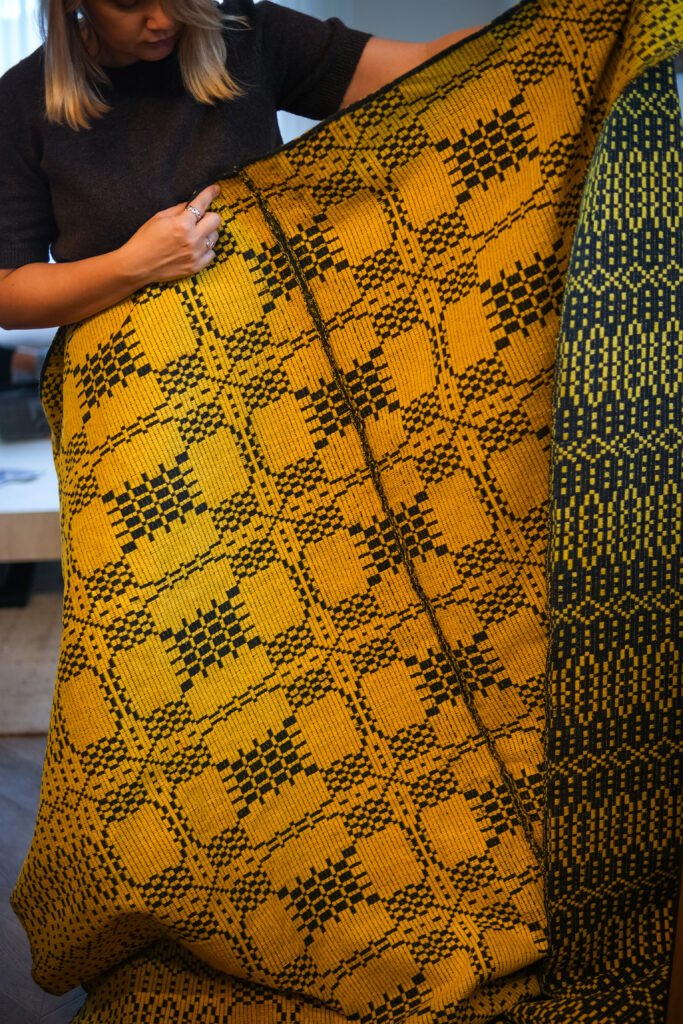
One of the most easily noticeable features is a seam down the middle of the bedspread. In the past, looms used at home were often too narrow to weave the full required width, so bedspreads were woven from two narrower sections called panels, which were then carefully sewn together. If the pattern matches precisely at the join, this shows not only the traditional production method but also the weaver’s great skill.
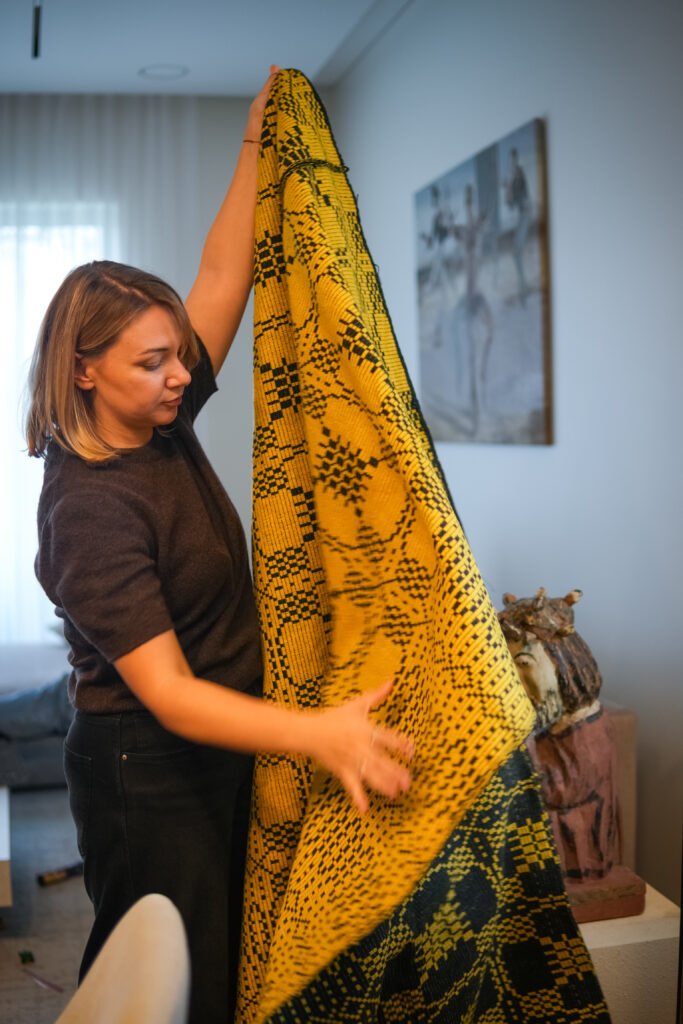
Another important sign is uneven thread. Hand-spun threads are rarely completely uniform in thickness: in one place they may be thicker, in another thinner. This makes the fabric surface look alive, with subtle irregularities, and distinguishes it from perfectly uniform industrial textiles.
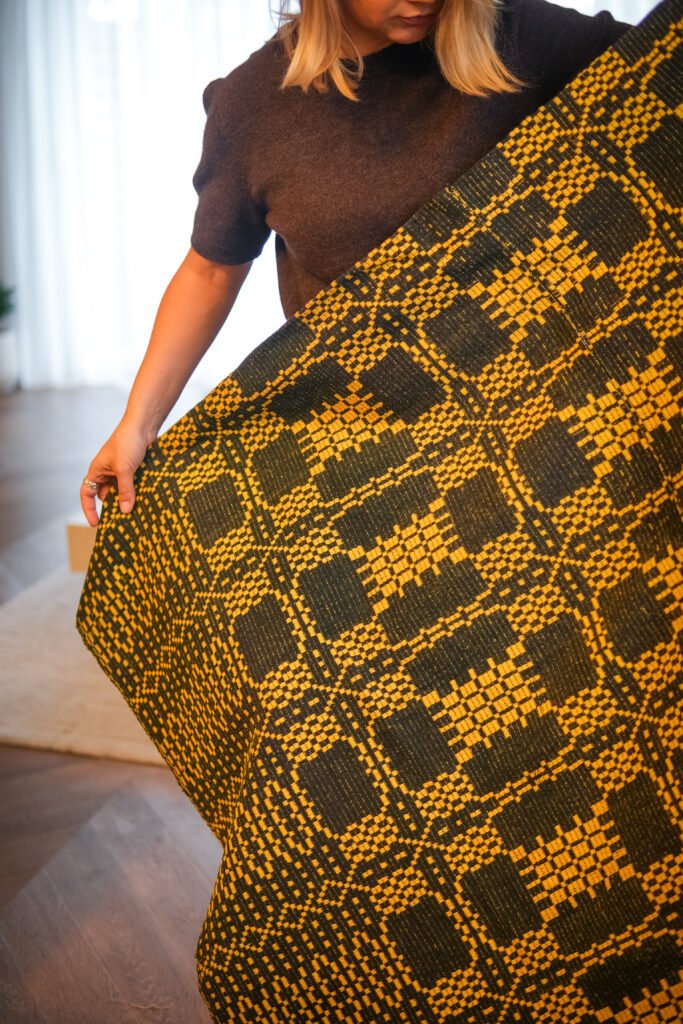
Diamonds, stars, checks, geometric bands, and stylized plant motifs often reflect Lithuanian textile tradition. The more complex the weave and the more precisely coordinated the pattern, the more skill the weaving required.
The value of a bedspread can also be increased by natural materials—linen, wool, cotton, or semi-wool. Color harmony, strong threads, preserved ornamentation, and authentic handmade irregularities help distinguish an exceptional textile piece from mass-produced fabric.
But the most important thing often lies not in the pattern itself, but in its origin. Who wove the bedspread? From which region of Lithuania did it come? Was it part of a dowry? To whom was it passed down? Such information gives the fabric additional cultural and emotional value.
Therefore, before washing, cutting, or adapting a bedspread for a new product, it’s worth examining it carefully and learning about its history. You may be holding in your hands not just a beautiful fabric, but a surviving testament to Lithuanian craftsmanship.
Even if a bedspread is damaged by moths, stains, or wear, you don’t necessarily have to discard it. Often the surviving parts of the fabric can be preserved and adapted for a new interior object. This way, not only the fabric is saved, but also its history, which can be passed on further.